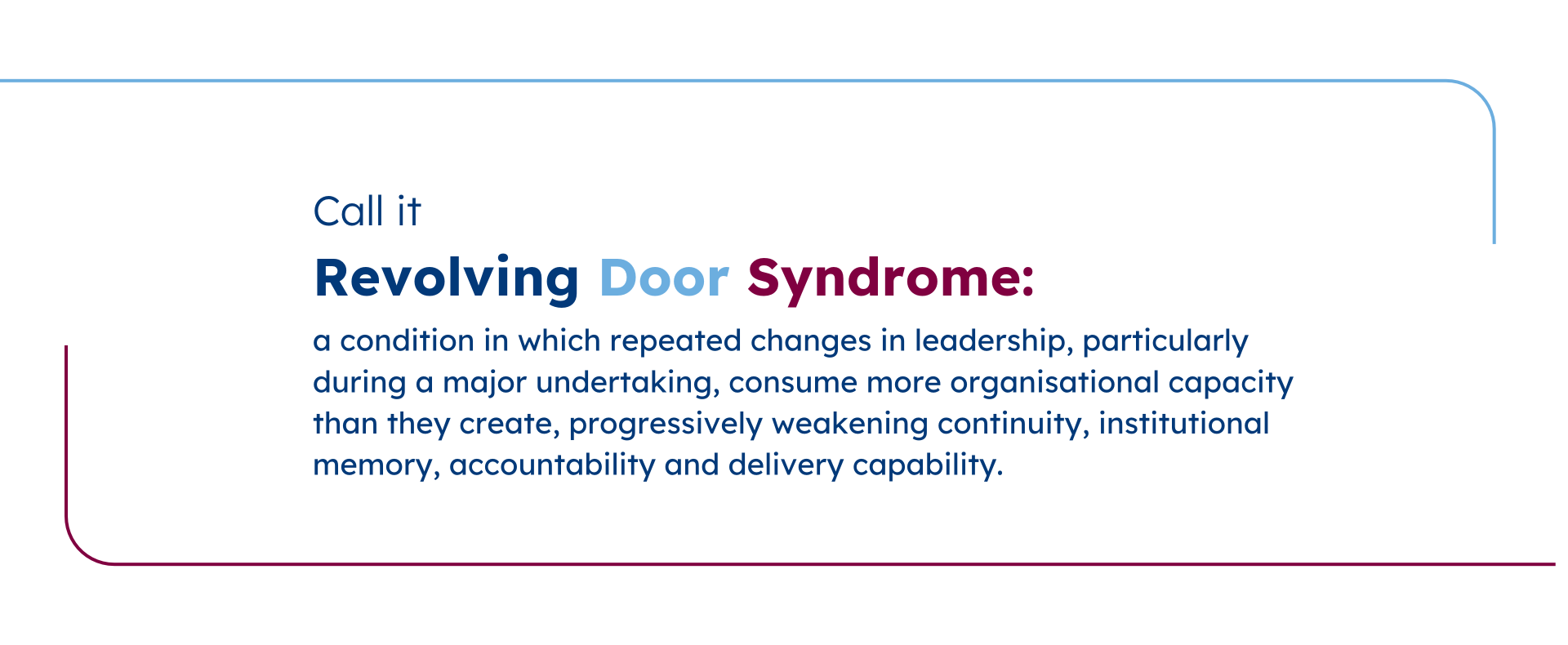
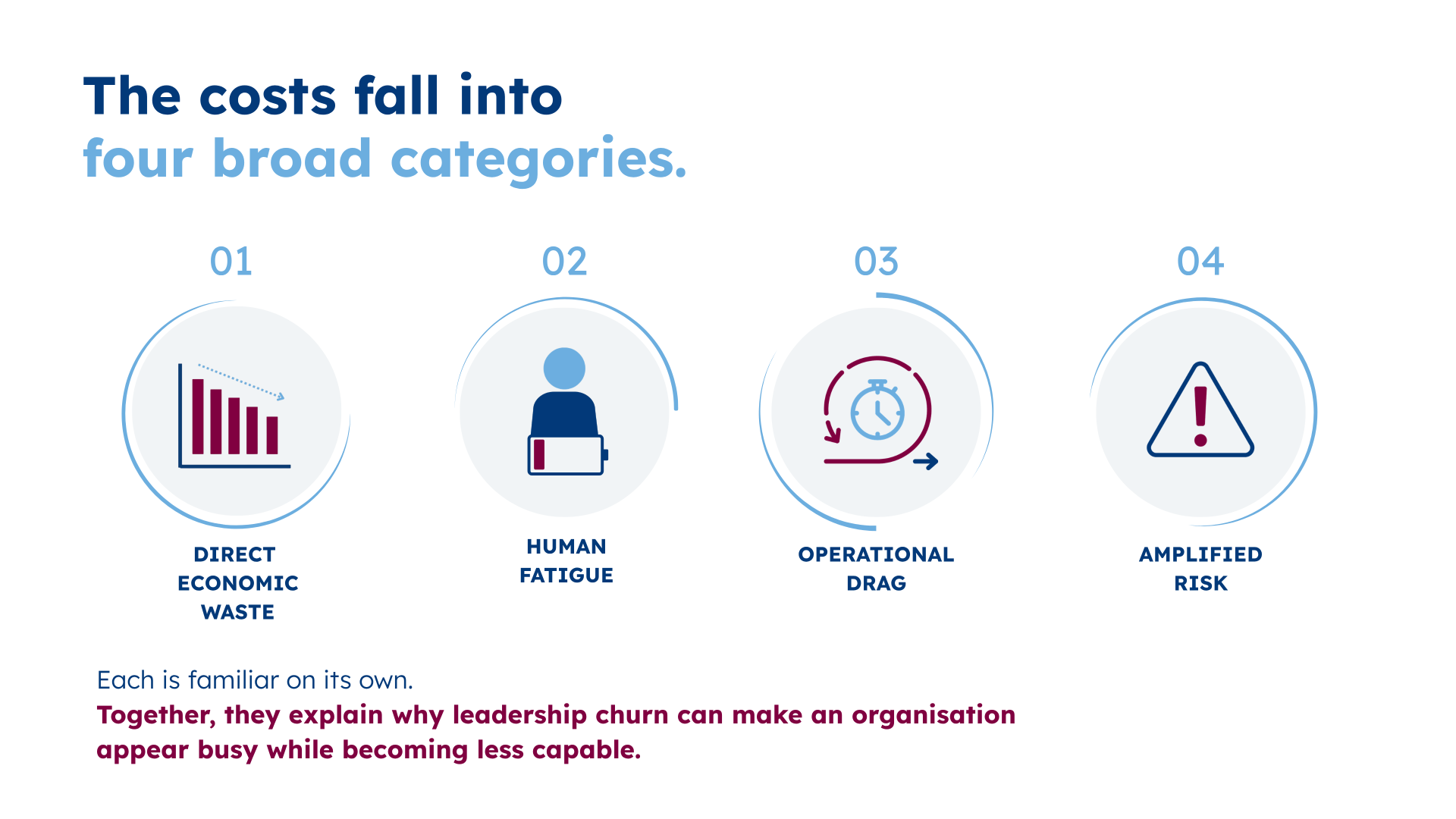
No single cause explains every leadership change. Turnover can be a response to failing performance, rather than its cause. But several forces increasingly reinforce one another and make continuity harder to preserve.
First is impatience and compressed accountability. Boards, shareholders and electorates increasingly expect visible momentum in much shorter periods. Investor activism, continuous media scrutiny and more demanding performance expectations narrow the time leaders must demonstrate impact. In 2025, 32 CEOs resigned within a year of an activist campaign; globally, departures within the 30 – 36 month window rose 79% year on year. The pressure is particularly acute when performance is judged quarterly or politically over a few months. This is not necessarily evidence of poor governance. Decisive intervention can be justified, but it does make long-term execution harder to protect.
Second is complexity with shorter horizons. Leaders are expected to address technological disruption, geopolitical and regulatory volatility, supply-chain exposure and changing stakeholder expectations simultaneously. Those pressures make strategic review necessary. The danger comes when review becomes automatic reset. Uncertainty is treated as evidence that the leader, structure or strategy must be replaced before the organisation has learned whether the existing response can work.
Third is an institutionalisation gap. In many organisations, the formal handover transfers milestones, budgets and organisation charts, but not the reasoning behind earlier decisions: the assumptions made, alternatives rejected, commitments given and risks consciously accepted. Strategy then remains attached to relationships and individual memory. When the leader leaves, the successor inherits facts without context and reopening decisions becomes understandable, even if it is costly.
Switzerland offers a useful contrast. Its government is not static: the presidency changes annually and Federal Councillors can resign. Yet a change of president does not represent a change of government. Executive authority rests with a seven-member Federal Council, whose members have equal standing; decisions are made collectively and consensus is actively sought. The President is primus inter pares chair, rather than a dominant executive.
This design separates visible leadership rotation from strategic discontinuity. A new annual president does not arrive with a new cabinet, mandate or automatic need to repudiate a predecessor’s decisions. The system has costs: consensus can be slow and difficult reform can take longer. But the principle is transferable. Continuity does not require one indispensable leader; it can be designed through shared decision-making, clear processes and collective ownership of decisions.
This can become self-reinforcing. New leaders are expected to show impact quickly and establish a mandate. A fresh structure, a new set of priorities, or a hundred-day plan offers the visible theatre of action. The incentive is often structural, not personal: research on CEO tenure suggests that leaders in their early years face especially strong pressure to signal competence through short-term decisions. The danger begins when differentiation matters more than judgement. Organisations then reward mobility over mastery, advancing people who move between roles rather than those who stay long enough to build deep expertise and see difficult initiatives through. The result is a peculiar form of organisational amnesia.
The result is a paradox. Organisations respond to uncertainty by changing leaders and direction more frequently; repeated resets then reduce the very learning, trust and execution capacity needed to deal with uncertainty.